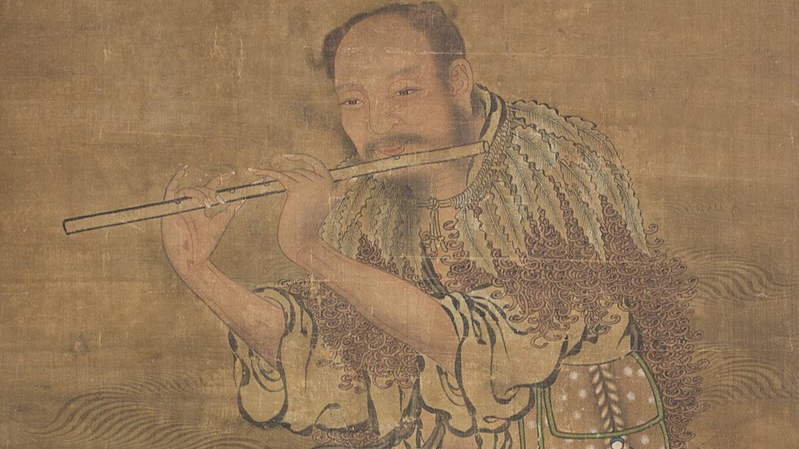
Han Xiangzi
Introduction
Han Xiangzi is one of the Eight Immortals, a group of legendary figures in Chinese mythology known for their transcendent abilities and representations of Taoist principles. The Eight Immortals are renowned figures whose stories are woven into the rich tapestry of Chinese folklore and cultural tradition. Each of these immortals, including Han Xiangzi, is associated with a specific symbol and represents different aspects of life and virtues.
Historical Context
The Eight Immortals, comprising Zhang Guolao, Han Xiangzi, Cao Guojiu, Lyu Dongbin, Lan Caihe, Li Tieguai, Han Zhongli, and He Xiangu, are central to many myths and legends. Han Xiangzi, in particular, is often depicted as a youthful figure, embodying the spirit of music and harmony. These immortals are typically depicted in art as traveling together or individually, each with their unique attributes. Han Xiangzi is distinctively recognized for carrying a flute, symbolizing his patronage of music and the arts.
The representation of Han Xiangzi and the Eight Immortals in art has been significant throughout Chinese history. Discovered in a 1980 excavation at the Xiguan Altar of Land and Grain site in Shuozhou, Shanxi, a collection of sculptures depicting these figures is a testament to their importance in Chinese culture. These sculptures are crafted from Fahua ceramics, a form of pottery that gained popularity during the Ming Dynasty (1368-1644). The Shanxi Museum currently houses these sculptures, preserving the cultural heritage they represent.
Cultural Significance
Han Xiangzi and the Eight Immortals have been subjects of Chinese art, literature, and theater, representing ideals of immortality and the pursuit of enlightenment. Han Xiangzi's stories often highlight his youthful exuberance and love for music, symbolizing joy and the transcendent power of art. His association with music and harmony is central to his depiction in Taoist lore, offering moral lessons and spiritual insights into the balance of nature and human life.
Mythological Stories
A notable legend involving Han Xiangzi is set against the backdrop of Huangshan Mountain, a place of immense natural beauty and cultural importance. According to the story, Han Xiangzi was so captivated by the scenery of Huangshan during an annual gathering of the Eight Immortals that he forgot to attend. His fellow immortal, Zhang Guolao, went searching for him, finding Han lost in the beauty of the mountain. In a whimsical twist, Han Xiangzi turned a stone into his likeness, naming it the "Immortal Showing the Way," to ensure he could find his way back on future visits. This tale underscores Han Xiangzi's perpetual connection to nature and his embodiment of joy and artistic inspiration.
Influence on Taoism
In Taoism, the Eight Immortals, including Han Xiangzi, serve as paragons of spiritual freedom and enlightenment, transcending the mortal world through their virtues and teachings. Han Xiangzi is often invoked in contexts that celebrate music's role in spiritual elevation and the harmonious interaction of man and nature. His stories continue to inspire artistic expression and reflect the enduring appeal of the Eight Immortals in Chinese culture and beyond.
Influence on Art and Literature
The depictions of Han Xiangzi in art and literature have evolved over centuries, from ancient scrolls and paintings to modern interpretations in films and popular culture. His image as a flute-wielding young immortal resonates with themes of creativity and the transformative power of the arts. Artists have captured his likeness in various media, often emphasizing his friendly demeanor and musical prowess.
Legacy
Han Xiangzi's legacy, along with the rest of the Eight Immortals, remains integral to understanding Chinese cultural heritage. The stories and legends surrounding him illustrate important values such as harmony, creativity, and the pursuit of enlightenment. As a symbol of the arts and harmony, Han Xiangzi continues to inspire generations, symbolizing the enduring connection between humanity and the natural world.








